
Strengthen merchant decisions with intelligence beyond risk models.
Signal adds Verified Intelligence
to the workflows fraud and compliance teams use to review merchants, counterparties, transactions, investigations, and escalations.
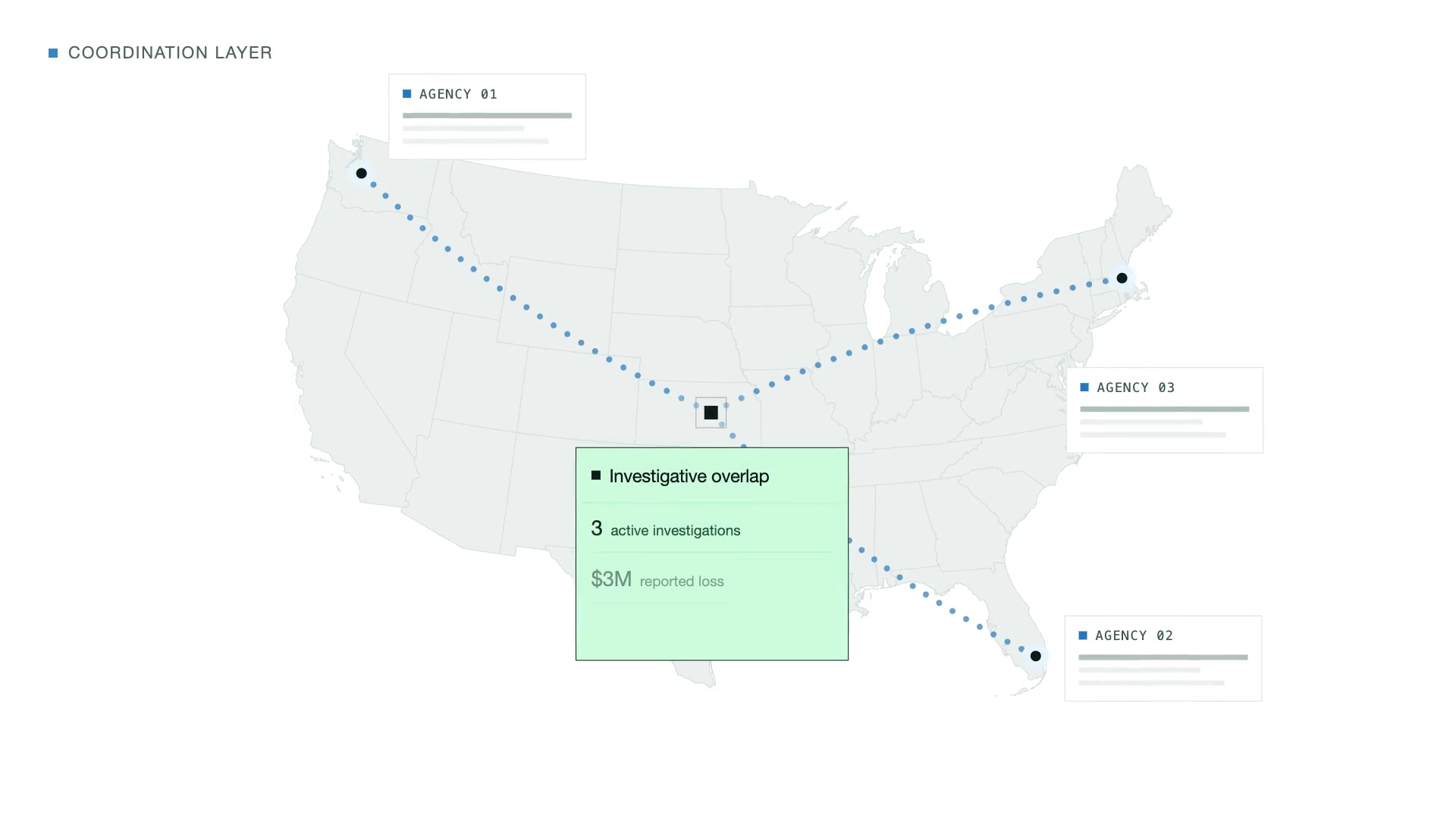

The Merchant Risk Decision
Payment processors review merchants, customers, counterparties, transactions, and fraud matters across relationships with financial institutions. Crypto-linked activity can affect onboarding, transaction review, merchant monitoring, and escalation.
Fraud detection and risk models identify behavioral signals. They do not independently determine whether relevant law-enforcement intelligence is available about a merchant or counterparty.

Defensible Decisions, Complete Documentation
When relevant intelligence is available, analysts can consider it alongside existing findings before deciding the appropriate next step.
Signal also supports ongoing review as new law-enforcement intelligence becomes available. This is particularly valuable for payment processors because merchant relationships and risk indicators can change over time.
Defensible Decisions, Complete Documentation

fraud detection

transaction monitoring

blockchain analytics

case management

Context Where Payment Decisions Happen
Context Where Payment Decisions Happen
Signal works alongside:
fraud detection
transaction monitoring
blockchain analytics
case management
Teams can evaluate Verified Intelligence during onboarding, transaction review, merchant monitoring, counterparty review, fraud investigation, and escalation. The intelligence arrives inside the systems they already use.
Enterprise-Ready, Stack-Agnostic
Signal supports API and existing-workflow deployment without requiring a replacement project.
Frequently asked questions
Does Signal replace a fraud platform?
No. Signal complements fraud detection by identifying relevant law-enforcement intelligence.
Can Signal work with existing payment infrastructure?
Yes. Signal works alongside transaction monitoring, fraud detection, blockchain analytics, and case-management platforms.
Can existing merchants be reviewed as intelligence changes?
Yes. Signal supports ongoing review as relevant law-enforcement intelligence becomes available.
Who participates in the network?
2000+ law-enforcement agencies across 40 countries contribute intelligence through the Deconflict network.