Your systems identify risk. We identify intelligence.
Verified Intelligence from law enforcement delivered into the workflows financial institutions already use. Ambiguity becomes clarity exactly when you need it.

.svg)
.svg)
.svg)
.svg)
More than 2000+ law-enforcement agencies. One unified platform.








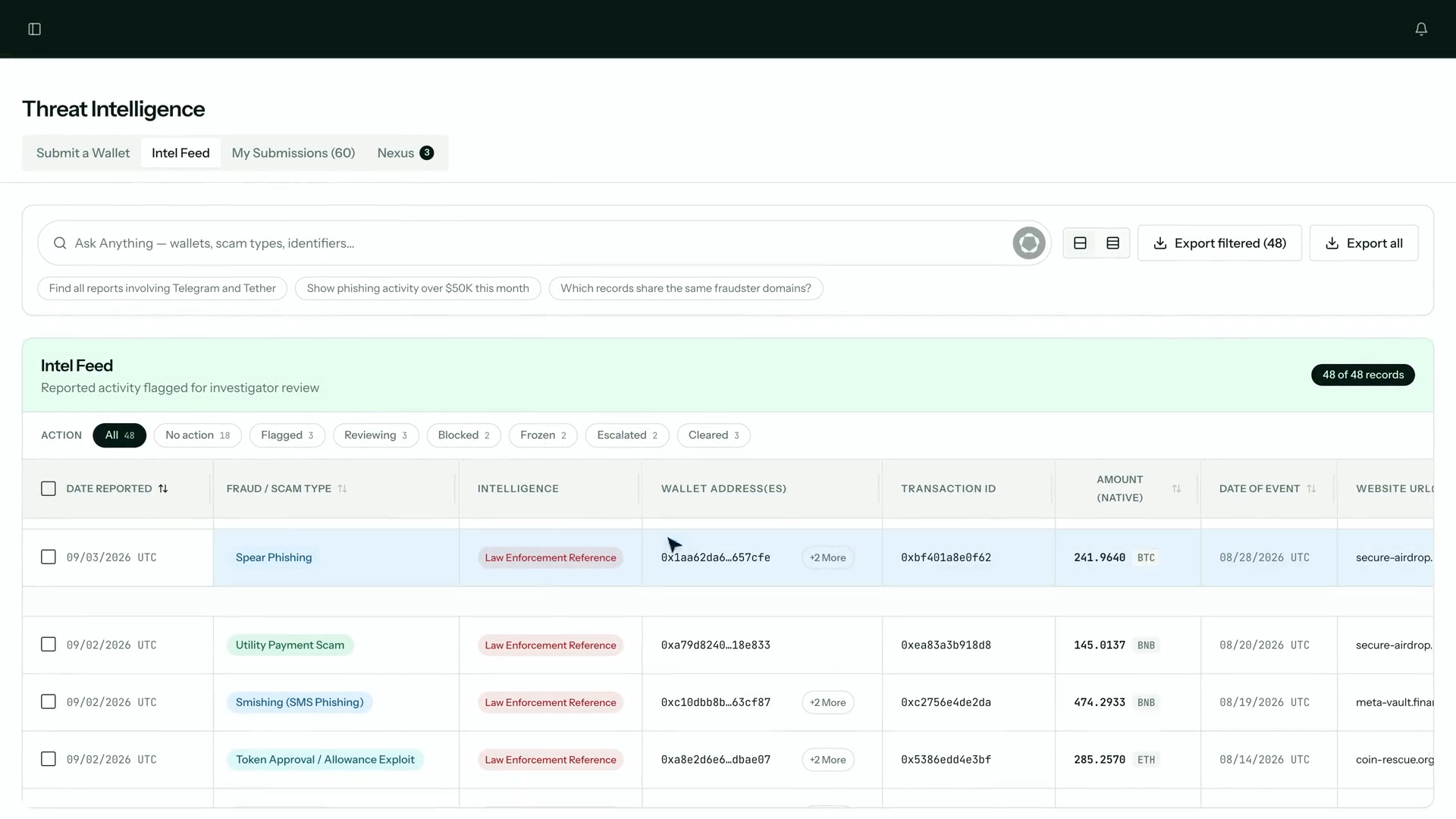
Five organizations, one subject, five separate investigations.
A subject moves funds through a bank, a card network, and two exchanges. Law enforcement opens a case in parallel. Each of the five is unaware the others exist. Each investigation stalls without visibility into the other party.
Existing information-sharing channels can be slow, informal, or legally constrained. Organizations may be unable to share the right information through a controlled, documented process, so relevant context never reaches the teams that need it.
We are the layer that makes the overlap visible, and the exchange defensible.
Verified Signal.
Your decision.
Request Demo

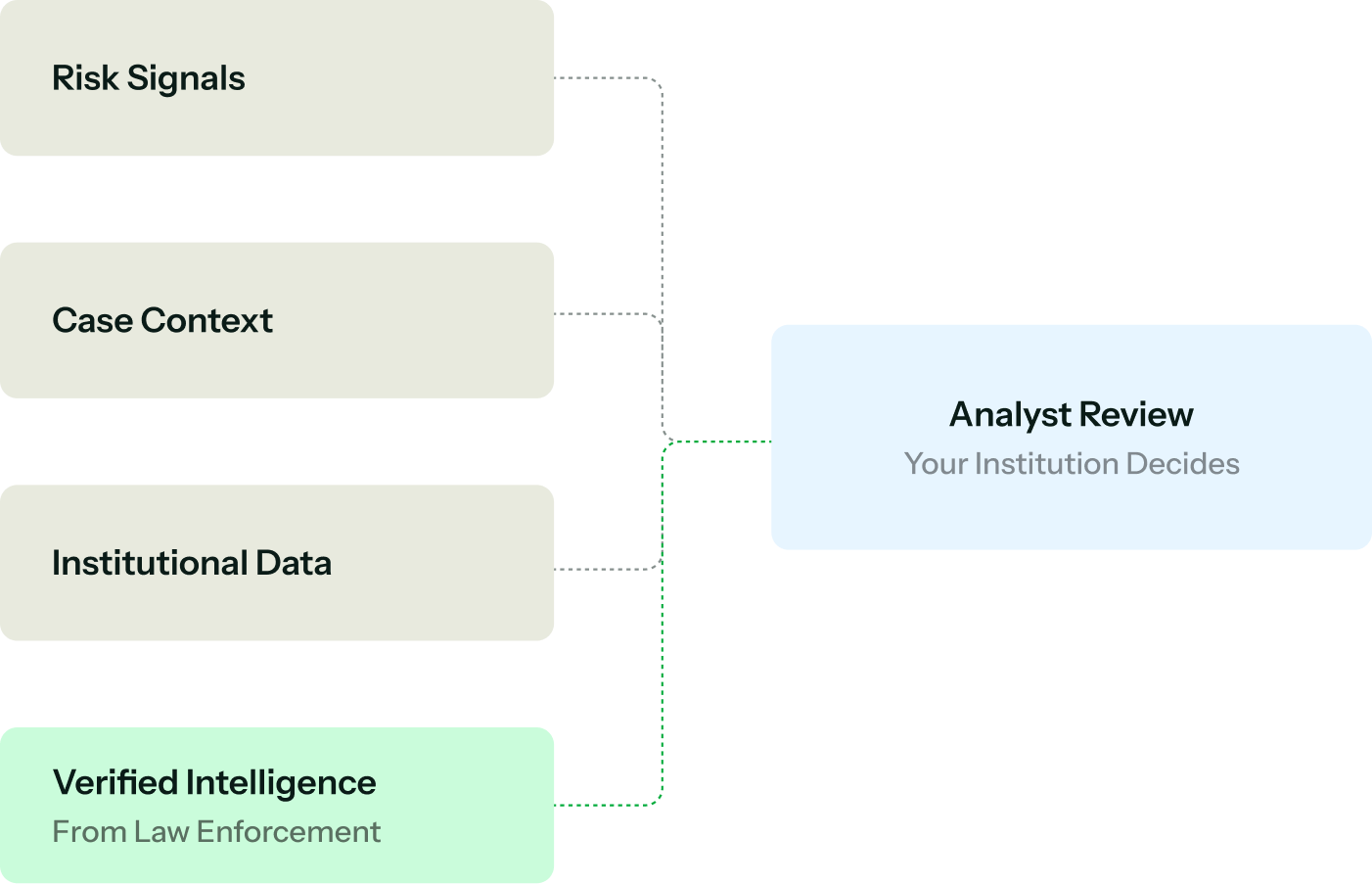
Use it to support

Alert investigation

Escalation decisions

SAR narratives

High-risk reviews
01
Signal
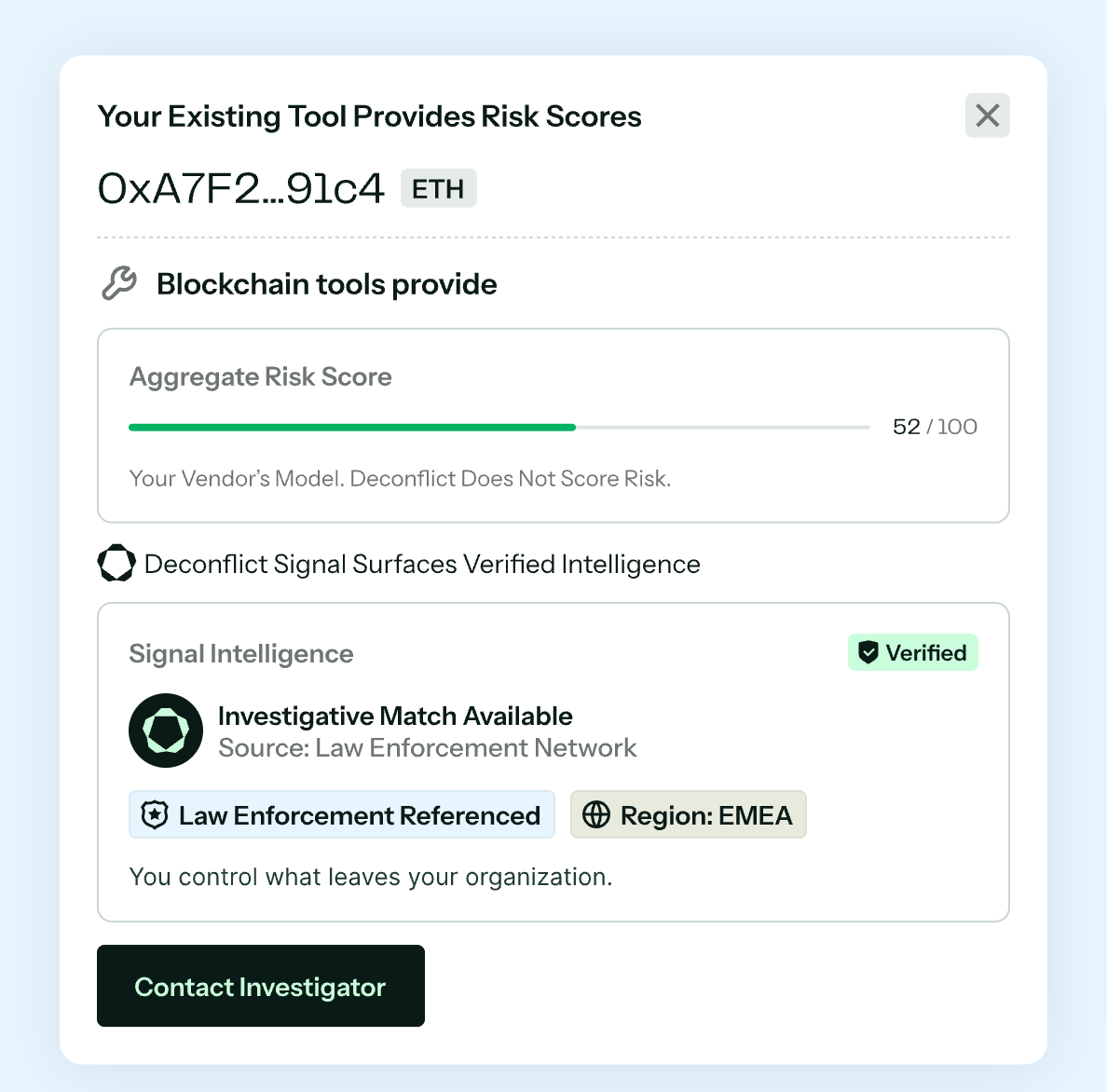
Deliver Verified Intelligence through API and existing-workflow integrations for wallet, counterparty, alert, and case review. Documented exports that support disposition records.
02
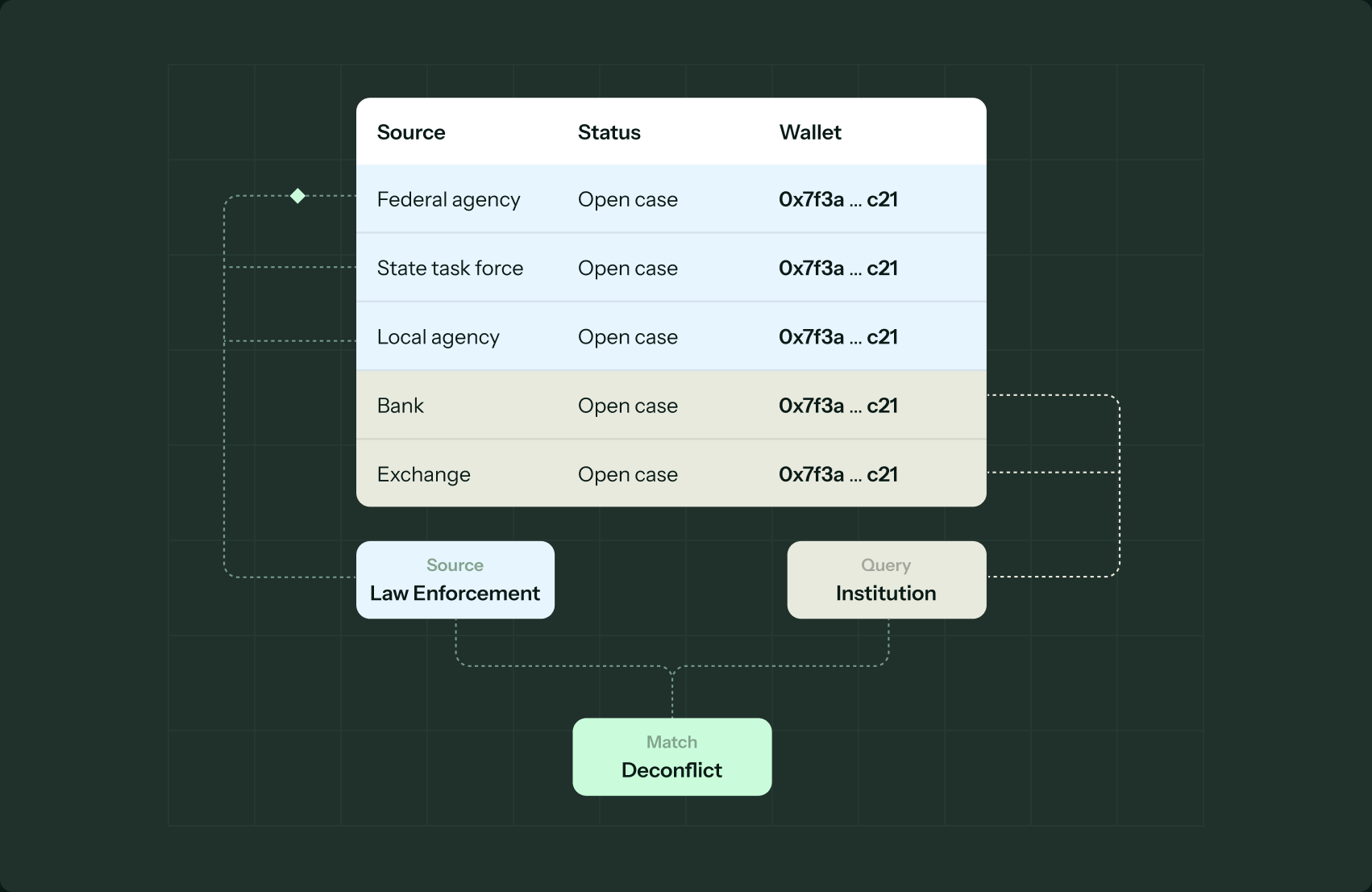
Threat Intelligence
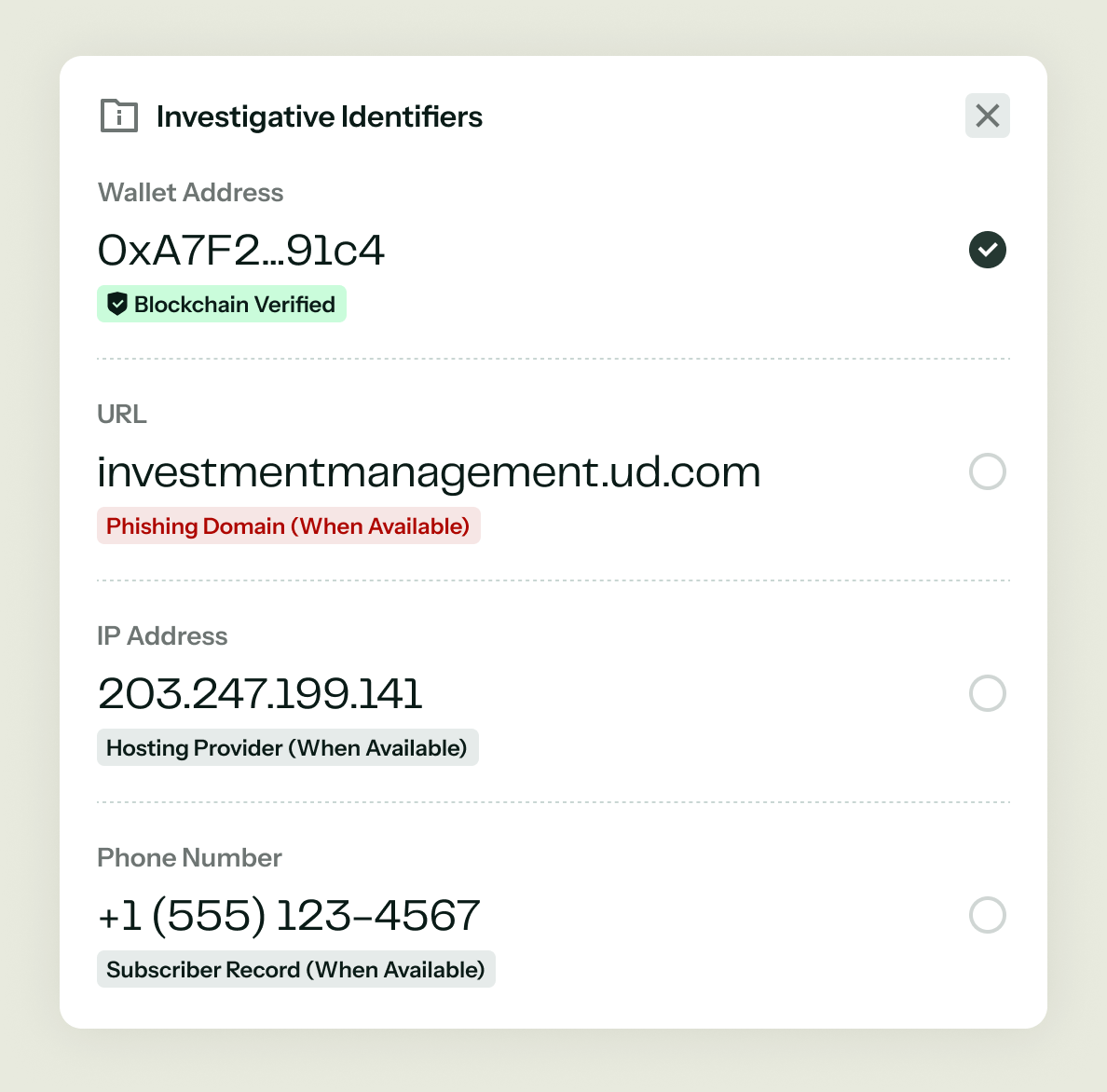
Search, organize, connect, and summarize law-enforcement intelligence at scale through API integration or a dedicated environment built for financial crime and compliance teams.
03
Nexus
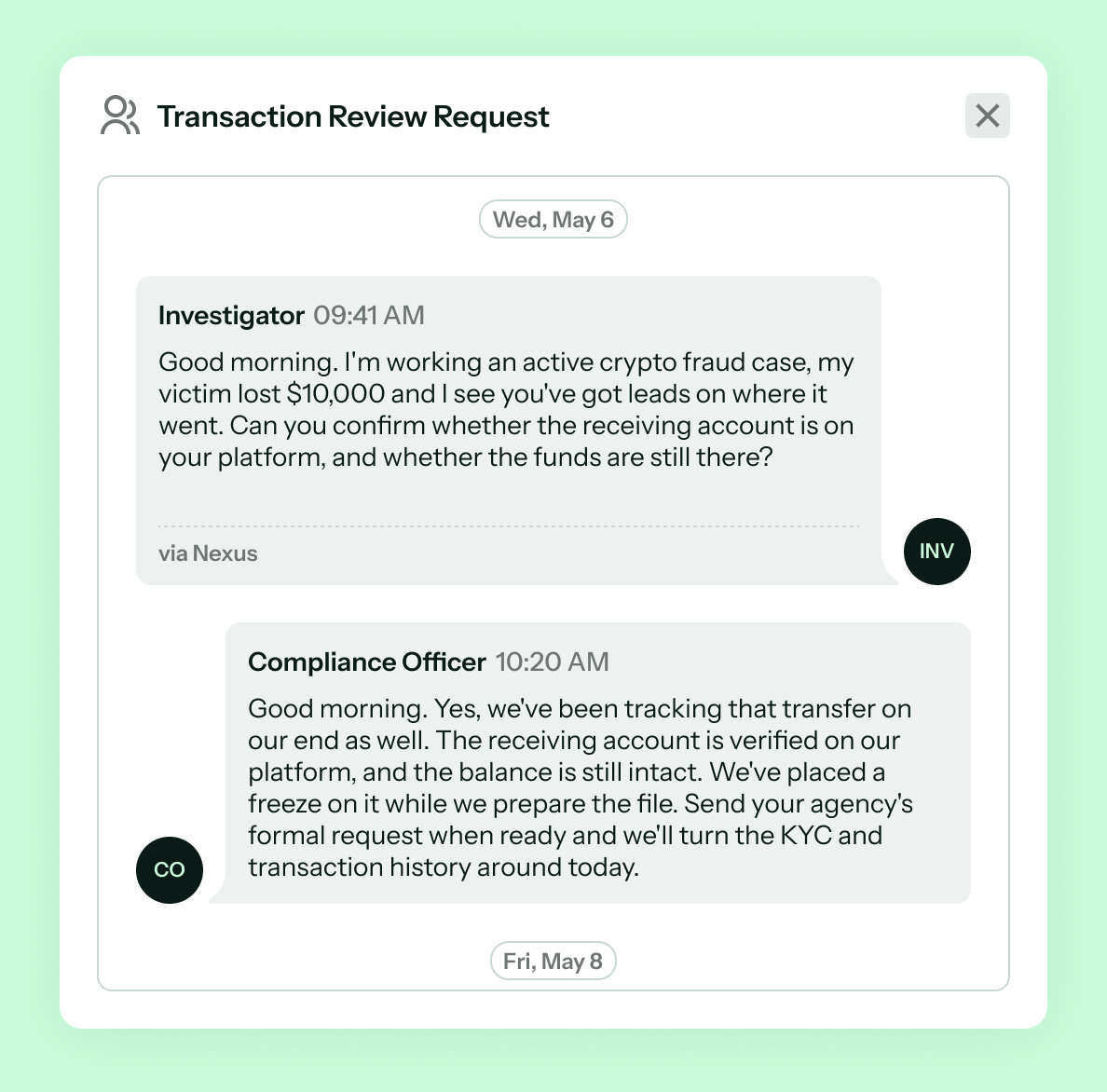
Nexus lets verified law-enforcement and compliance teams communicate securely, with every exchange documented and within defined disclosure limits.
Nothing leaves your institution that you did not release
Built for the legal and supervisory constraints financial institutions actually operate under. The mechanism is the product.

Match
Overlap before content. The first thing you learn is that a counterpart holds the same identifier. Not their case, not their customer. The overlap alone.
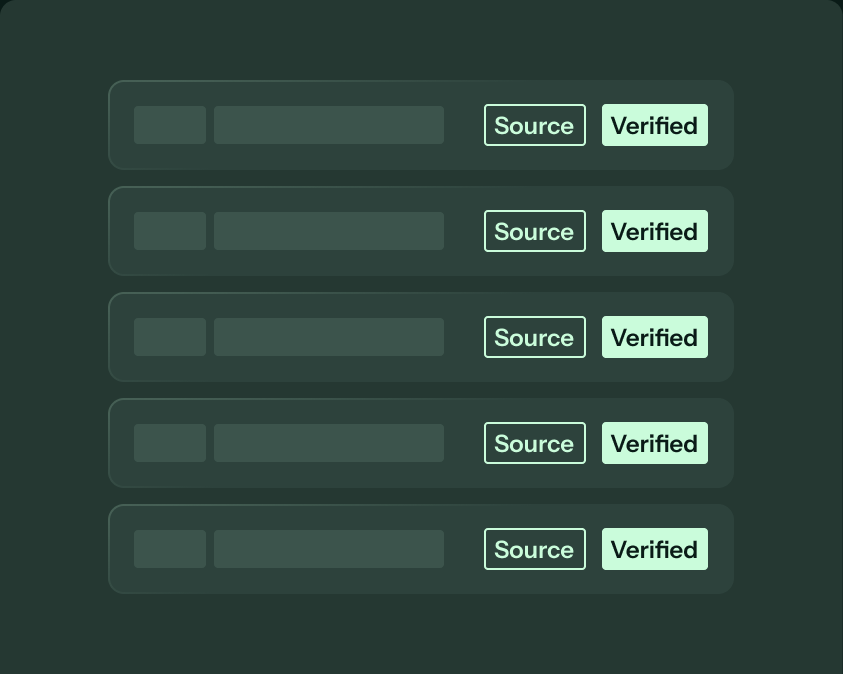
Attribute
Provenance on every value. Each identifier, note, and disposition names the organization that submitted it and the date it was verified. Provenance is not optional.
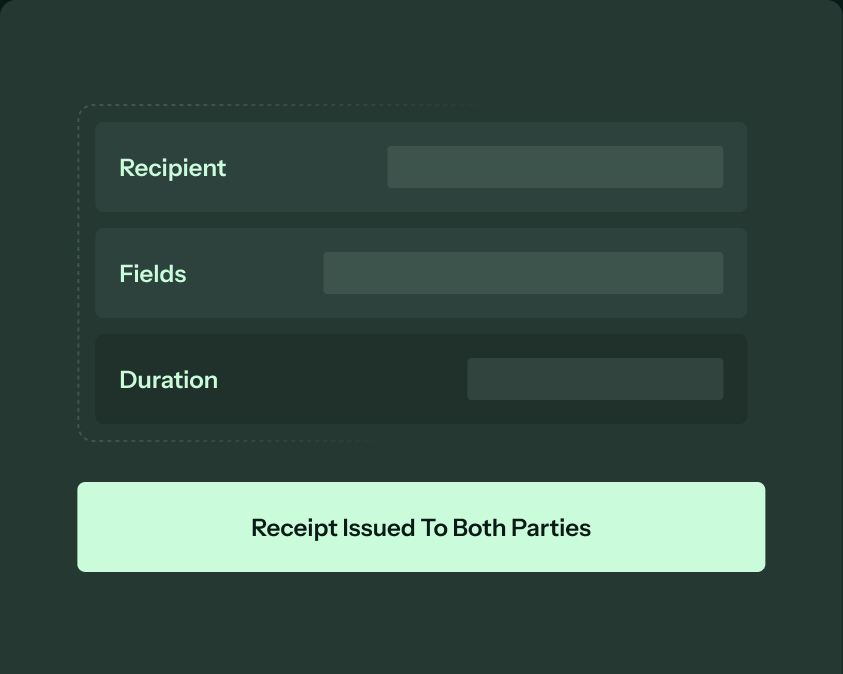
Disclose
Scope set by you, per exchange. You choose the counterpart, the fields, and the duration. Both sides receive the same documented record of the exchange.
Deconflict connects institutions while delivering intelligence through the workflows they already use

The Verified Intelligence and coordination layer between the institutions and agencies working the same subject.

Not a detection engine.
We do not score, rank, or estimate likelihood. We surface verified matches for analyst evaluation.
Not a data marketplace.
Nothing is sold, resold, or pooled. Every value stays attributed to the organization that submitted it.
Not a replacement for your case management system.
Signal delivers into the tooling your analysts already use.
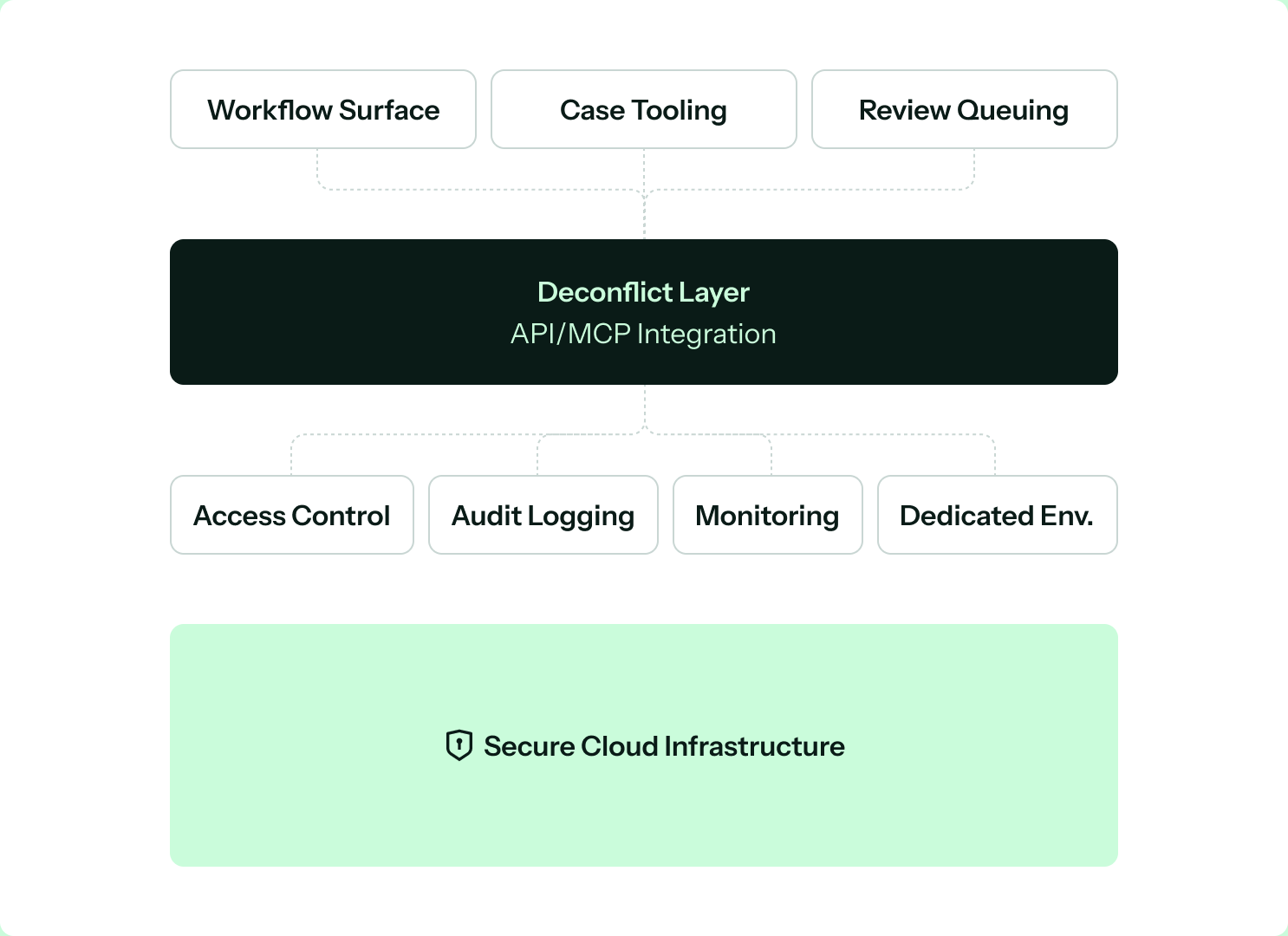
Enterprise-Ready Integration
Supports API and MCP integration, existing-workflow deployment, and dedicated environments while preserving institutional judgment and legal process.
Deployment options support enterprise authentication, role-based access controls, audit logging, secure cloud infrastructure, and continuous platform monitoring.
Institutions can adopt the capabilities that fit their operating model without replacing existing compliance infrastructure.