
Scale compliance decisions with intelligence your systems cannot generate.
Signal gives fintech compliance teams Verified Intelligence
for crypto flows and crypto-active customers inside the systems they already use.
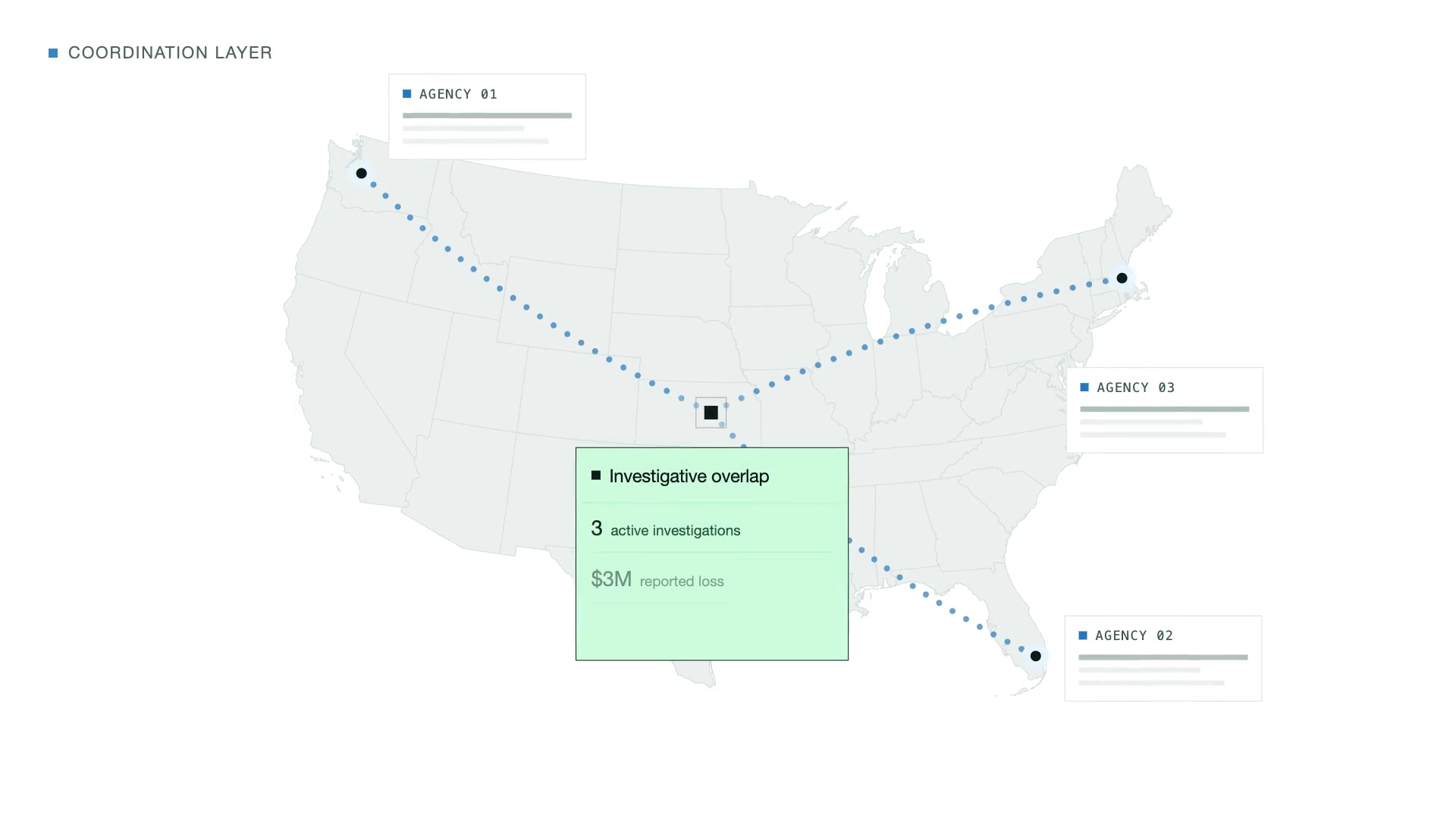

The Scaling Challenge
Fintechs with crypto flows or crypto-active customers rely on AML, KYT, fraud, onboarding, and transaction-monitoring systems. Those controls identify risk. They do not independently identify when relevant law-enforcement intelligence is available.
Signal adds that context inside existing workflows so analysts can evaluate it during review, escalation, and documentation.

Intelligence That Strengthens Compliance Documentation
Signal supports investigation, escalation, and documentation without asking teams to abandon familiar systems. When relevant intelligence is available, it can support more complete compliance documentation and SAR narratives.
The fintech remains responsible for its decisions. Signal provides additional context for evaluation under the institution’s existing policies and controls.
Intelligence That Strengthens Compliance Documentation

transaction monitoring

blockchain analytics

fraud detection

sanctions screening

onboarding

case management

Context Where Fintech Teams Decide
Context Where Fintech Teams Decide
Signal works alongside:
transaction monitoring
blockchain analytics
fraud detection
sanctions screening
onboarding
case management
Teams can evaluate Verified Intelligence while reviewing a customer, transaction, counterparty, alert, fraud matter, or escalation. The context arrives inside the tools they already use.
Enterprise-Ready, Stack-Agnostic
Signal supports API and existing-workflow deployment for regulated fintechs and financial institutions. Add Signal without replacing the fintech’s compliance stack.
Frequently asked questions
Which fintechs fit Deconflict?
Deconflict is relevant to fintechs with crypto flows or crypto-active customers and an existing or required AML, KYT, fraud, or transaction-monitoring system.
Does Signal replace an existing compliance platform?
No. Signal complements existing compliance infrastructure.
Must teams change their current workflow?
No. Signal is designed to work alongside current workflows.
Who participates in the network?
2000+ law-enforcement agencies across 40 countries contribute intelligence through the Deconflict network.