
Register
Sign in
Menu


The October 29, 2026 Binance hack is a case study in what happens after stolen funds begin moving. The exchange worked to contain the incident and identify affected transfers. The FBI issued an alert with addresses and asked virtual asset service providers, decentralized finance services, instant exchanges, blockchain analytics firms and other entities to block transactions involving them. Binance reported approximately $6.34 billion in affected assets and about $2.85 billion frozen or intercepted by November 3.
However, “frozen or intercepted” does not mean recovered. The public record also does not show that one tool or organization produced the result. Binance said it worked with law enforcement, blockchain intelligence firms and industry partners. The evidence supports a narrower, more useful conclusion: public-private coordination helped get indicators to organizations positioned to act.

For investigators and financial institutions, that is the operational lesson. Deconfliction can help identify related investigations and connect authorized parties. It cannot trace funds, authorize a freeze or establish guilt on its own.
Treat the first alert as the start of a controlled workflow, not as a reason to circulate an unqualified wallet list.
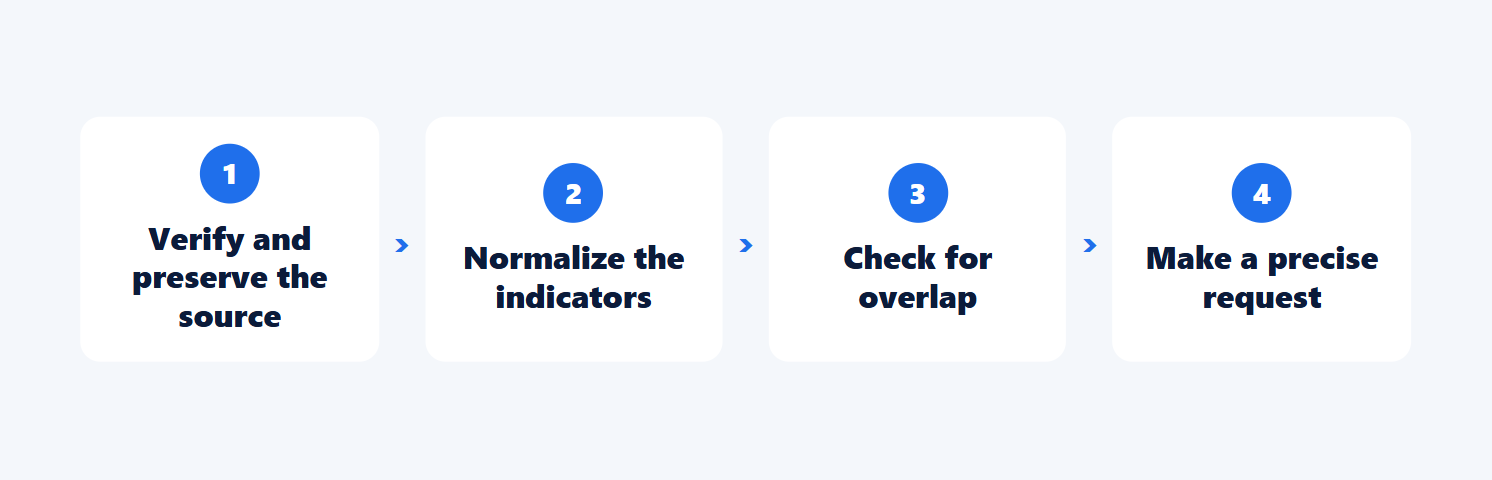
Make the alert actionable with one row per indicator: chain and asset; address or transaction hash; first-seen time in UTC; source; confidence and whether the link is direct or indirect; current status; requested action; review time; and verified reply contact. Separate observed facts from analytical assessment. A recipient should not have to infer why an address is on the list or whether the information is still current.
Update or withdraw indicators as evidence changes. An outdated list can misdirect reviews and consume time when funds are still moving.
Assign an incident lead across fraud, AML, cyber, investigations and legal teams. Screen validated indicators against relevant payment, customer and virtual asset exposure. Review associated movements and customer reports, then preserve transaction records, access logs, communications and case notes under internal procedures.
A match should trigger review, not an automatic conclusion about a customer. Document what the alert says, what evidence the institution found, who reviewed it and why the team took or declined further action. Escalate through established channels and assess reporting obligations independently.
Section 314(b) is one existing option for eligible financial institutions to share certain information with one another for specified anti-money laundering and counterterrorist financing purposes. FinCEN’s 2026 guidance clarifies its application to suspected fraud. It is not blanket permission to share customer records with every public or private participant; SAR confidentiality and other requirements still apply.
Authenticate the alert and determine whether assets remain within control. Apply monitoring, restrictions or freezes only under applicable law, policy and process. Preserve relevant account, deposit, withdrawal, access and communication records before routine retention periods remove them.
Acknowledge the alert through a verified channel. State what was reviewed and what action was taken, while routing requests for customer records through established legal processes. The FBI’s request after the Binance theft shows why alerts need clear indicators and recipients: service providers can only act effectively when they know what to check and where to direct questions.
Triage by exposure. If an identified asset is currently under the provider’s control, escalate for urgent review under its procedures. If funds have moved elsewhere, monitor relevant flows and preserve available records. If the association is indirect or historical, route it for analysis rather than treating it as an immediate freeze request.

Deconfliction addresses a specific delay: a team may not know another authorized participant is already examining a related wallet, transaction, victim cluster or piece of infrastructure. A timely match can point investigators to relevant context and a verified contact before separate teams repeat outreach or miss a connection.
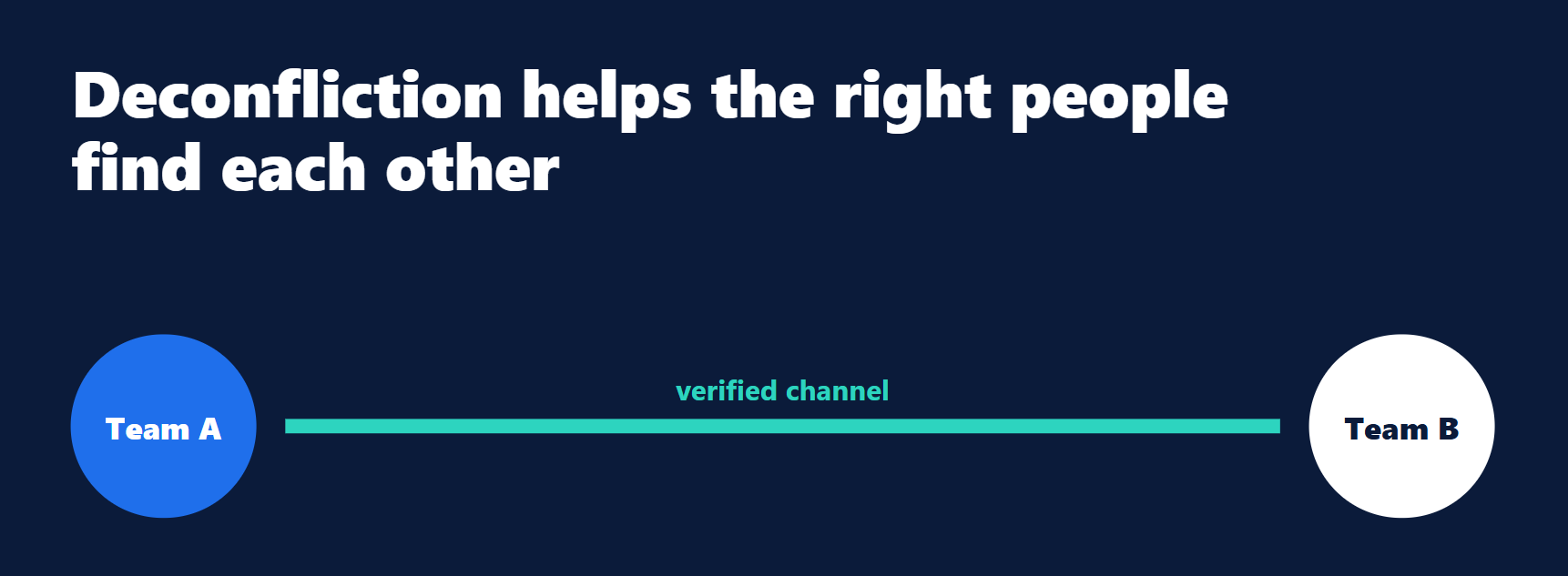
A practical process is simple: an authorized participant submits a scoped identifier with its source and purpose; the system checks for relevant overlap; and, if a match is appropriate, the parties connect through an authenticated channel. Any additional disclosure remains subject to permissions, contributor control and legal process.
This can help an investigator route a lead to the right agency or help an institution ask whether verified investigative context exists. The institution still makes its own decision. The service provider still applies its own controls. Deconfliction helps the right people find one another; it does not perform tracing or freeze assets.
Before an incident, define how recipients authenticate alerts, which fields each alert must contain, what actions recipients can take and how updated indicators will be sent. Name escalation contacts and set expectations for acknowledgment and evidence preservation. Test the process with agencies, financial institutions, exchanges, and service providers, including stale indicators, false positives and cross-jurisdiction handoffs.
Measure whether the right recipient verified the information, acted within its authority and returned useful information while the trail was actionable. The number of organizations on an email list is not a measure of coordination.
Major exchange hacks require connected action: containment, reliable indicators, timely alerts, fund tracing and decisions by organizations with relevant visibility.
Investigators should verify, deconflict and route leads early. Financial institutions should review exposure without treating an alert as proof. Exchanges and service providers should preserve evidence and respond through verified, authorized channels. That is how public-private coordination becomes an operational capability rather than a general call to share more.
Deconflict connects participating law enforcement agencies and regulated financial institutions so authorized teams can identify relevant investigative overlap and coordinate through verified channels when appropriate.
Learn more about Deconflict here.
Public reporting confirms coordination among Binance, law enforcement, blockchain intelligence firms and industry partners. It does not attribute a specific amount frozen or intercepted to formal deconfliction alone.
The FBI asked virtual asset service providers, DeFi services, instant exchanges, blockchain analytics firms and others to block transactions with or derived from addresses it identified.
Blockchain analytics traces and analyzes on-chain activity. Deconfliction checks whether authorized participants may hold relevant investigative context and helps establish a verified path to coordinate.
No. Section 314(b) is a specific safe harbor for sharing information among eligible financial institutions. It is not a blanket authority to disclose customer records to law enforcement or other participants.